Showing posts with label reading. Show all posts

9/19/2016

How Do You Know Your Writing Is Good?

A few weeks ago, my girlfriend and I were at a local restaurant catching up with two of our friends. Over our various fried foods and beer, we started asking each other what we were working on. I shared I was investing time each day to practice writing, which piqued my friend's interest.

“How do you know if your writing is good?” he asked.

I paused. “You don’t know.”

The question stayed with me and perhaps it’s something you’ve wondered too.

------------------------------


The following guest post comes to us from writer and entrepreneur Dan Murphy. To read more of his articles, check out his blog at DanMurphy.me

------------------------------

When you’re writing, there’s no instant feedback mechanism. It’s not like Super Mario Brothers, where you make it to the castle or not. In school, you handed in your writing to a teacher. In real life, there are no grades.

Even if you do give your writing to someone, there is no universal standard of quality. An English professor and a friend writing for a craft beer blog will have very different opinions.

“Good” writing is relative. Even the greatest literary works of our time have bad reviews on Amazon.

For a beginner like me, it’s even tougher. After writing, editing, re-reading, and editing again, I compare my work to the articles and books I enjoy. Most of the time, I feel I miss the mark.

So, what can I do to improve?

I can take time each day to close the gap between where I am and where I want to be. Anyone can.

The Importance of Feedback


The only way to close this gap is to get feedback on your work. The biggest challenge is allowing yourself to be open to it. 

Feedback isn’t always easy to receive. I’ve invested time writing and revising my work, and I’d like it to be viewed as perfect.

Then a friend or colleague emails me saying my writing is far from perfect. I made huge mistakes. The advice is good, but my ego takes a hit.

All of this is perfectly fine. These temporary letdowns and stings are how the gap is closed.

I’ve learned that temporary stings are just that: Temporary. It’s important that I put my ego aside and focus on how the feedback will help hone my writing. The sting is just my ego getting in the way.

If someone takes the time to correct you and offer suggestions, pay attention. Feedback, when offered in a pleasant and helpful manner, is a gift. Be grateful. Look to apply it. Ignore it at your own peril. This is how you improve.

One thing to keep in mind: A thing needs to be bad before it becomes okay, okay before it becomes good, and good before it becomes great.

Where can you get feedback? Here are a few places:

1) Feedback from friends


Feedback from friends is valuable, but can be tricky to get.

Friends may fear that if they’re brutally honest it will destroy the relationship. To receive useful feedback, you need friends that will be 100% honest.

A few of my friends and I have relationships based on complete honesty. We both understand being honest may be a temporary pain, but there’s no malice behind it. If you can find friends open to giving you honest feedback, do it.

Feedback like “It’s good” or “I liked it” isn’t helpful. If they say “it sucked,” ask them what sucked about it. You may have to dig a little. If they don’t feel comfortable, don’t ask them to do it.

It is possible that friends don’t know good writing from bad, and that means their feedback would be limited, or not very helpful. If they tear through a book a week, they could be helpful. Someone who stopped reading a book because it was terrible may be a great candidate.

Another sad reality: Many people won’t—or simply can’t—take the time to help. Even if they try, their feedback may be far from helpful. This is part of the process. Continue to look for the person that will provide the feedback you need.

2) Ask someone whose writing you admire


When my friend Christy writes an email or a blog post, it has style and grace to it. She produces colorful sentences that flow. Her word choice and sentence structure are diverse. When comparing her writing to mine, I feel like mine falls short.

I want to write more like her, so I reluctantly asked her for help. She obliged, and has been amazing in pointing out where I could improve.

She checks three boxes: she’s a great friend, honest with her feedback, and a great writer.

When reaching out to someone, make sure it’s someone accessible. You may admire the writing of Stephen King, but he’s not available to give you feedback now. Or ever.

A writer with a lightly-trafficked blog [Like me!], a journalist writing for a local news publication, or an author beginning his or her career could be accessible. Ask to review their articles before they are published, help them gain exposure, or offer to proof their unpublished book. Give before you can receive.

3) Trade services or goods


If you don’t have money to pay someone, there’s always the option to trade goods or services. See what a potential reviewer needs help with, and offer to do that task for them in exchange for some critiquing time.

A little tip: Before you do this, make sure to determine the scope of the trade before you begin. What will you do? How much will you do? When you complete the task, how much proofreading time will you receive?

People value services differently. If you agreed to paint a ceiling for someone in exchange for critiquing time, you may value the task at $1,000, and the other person may value it at $300. Hammer that out first so neither party feels it was an uneven trade.

4) Pay someone


Editors all over the world offer critiquing services at a reasonable cost. Check out services like UpWork, Guru, and Freelancer. Post a job on one of these sites asking for help with your writing.

These sites allow you to explain the scope of the job and what you’ll pay. The job description could contain something as simple as, “I’ll pay $X per hour/article/page to receive assistance with my writing.” Compared with trading goods or services, the scope of the job is clearer, so no one feels like they’re shorted in the end.

Before engaging anyone, view the rankings and reviews of the potential hires to determine who is a good fit. Of course, the most important part is finding a person you can communicate with, and who understands your writing goals.

If you think someone is a good fit, hire them short-term and see how the relationship works. Don’t be afraid to switch editors if one isn’t working out.

5) Join a group, online or off


There are plenty of writing groups. If you're interested in an online group, a quick search on Facebook will show a few to check out. Some are public (anyone can join) and some are private (you need to request access).

A tip for Facebook groups: Before or after joining, look at the size of the group. Some groups are too large to be effective. Feel free to lurk a bit and see if the group is a good fit and contains other supportive writers.

Search Facebook for events that cater to writers. You can also use Google to look up “writing groups near [city]” and see what turns up. Another resource is Meetup.com, which lists thousands of in-person events, including writing groups. Check if your local library hosts workshops or events.

There are a ton of ways to find these events. Start digging and see what you uncover.

6) Start your own group


Almost a year ago, I started my own group for writers on Medium. The idea was to motivate myself to write more and help others when I could.

I started with a post on Facebook stating I was forming a writers group. At the time, I had no idea how it would be run. Only after people showed interest did I figure out the rest. Now it has a nice membership and is growing a few members at a time.

Anyone can do the same. Put something on Facebook, Twitter, a forum, or wherever you find other writers. Even if you get just one other interested person, that’s a start.

I didn’t plan how my group would work, but you might want to plan yours before you start. People will expect the group to have structure and will look to you to provide it.

Even if you plan thoroughly, be open to adjustment as the group evolves. When I started, I received article submissions via email. After almost losing a few, I moved to a submission form. I’ve also changed the format of the emails to tighten things up, reduce clutter, and make things clearer.

7) Read books on writing


Books on writing cost less than a large pizza (and have fewer calories, I assume) and can help you determine if your writing is on the right track.

In Bird by Bird, Anne Lamott covers a vast number of topics in an entertaining way. Her section on putting perfectionism aside was a huge help in completing my drafts. She covers how to overcome mental hurdles like jealousy and writer's block, a topic other books omit. She also has a section on how to get help from others, and decreasing your learning curve.

William Zinsser’s On Writing Well is filled with methods to refine your writing. His first section focuses on writing principles and how to keep things simple. The chapter “Words” shows how caring about words helps you select better ones while avoiding clichés. If you’re stuck on how to start or end an article—both cause me difficulty—there’s a chapter on this.

Apply What You’re Learning


Learning how to write is easy, but writing is hard. Focus more effort on the hard part. Writing and revising will show you where your struggles are. Once you start understanding your struggles, you’ll learn what you don’t know and know what you need to learn.

These are the sources of feedback that I have found most effective. Of course, there are other ways that you may discover on your own. See what works and discard what doesn’t.

No matter which methods you decide to use, always experiment with new ways to obtain feedback. This is the fastest way to improve as a writer.

8/29/2016

Books: Past and Future

I love paperback books. Hardbacks look pretty on the shelf, and their larger size makes their covers more interesting to look at, but they're nearly impossible to read. The dust jacket is the first obstacle; either you expend half your attention keeping it on the book, or you set it aside and inevitably end up tearing it or creasing it so it never quite fits again. 
Hardbacks are much too heavy to read clasped between upheld arms while lying back in bed, let alone held one-handed while lying on your side. If your arms tire and you let the book settle into your chest or stomach, you have to lift it to turn a page, or risk tearing them every time you drag them across your body. Even if you read at a desk (which is plainly ridiculous) you have to deal with their unyielding spines, which won't allow you to remove your hand from the page for even a second, or you'll lose your place as the book automatically flips back to a more comfortable posture.

Paperbacks, on the other hand, are light, flexible, and cheap enough that you won't feel bad about creasing their spines to force them to stay open. You can read them in all sorts of ridiculous positions; curled up in a fetal ball, hunkered sideways on a daybed, even lying upside down on a couch with your feet in the air--and your arms will take MUCH longer to tire.

But the benefits don't stop there. Whenever I finish a chapter, before I put down the book, I take a moment to bend it in my hands and watch the way the pages move. Often, I'll buzz through them like a flip book, holding the edge close to my nose so I can draw in that dusty, woodsy smell that isn't quite "good", but is too familiar to be unpleasant.

With a hardback, I feel guilty for dog-earing the pages, but I'm too scatterbrained to keep from losing a bookmark. Paperbacks, I fold with gusto, always making sure to line up the corner of the page with the exact line I stopped on. When I resume my reading, I fold them the opposite way so they'll lay flat, but the pages never lose the telltale crease of a book that has been thoroughly and hungrily enjoyed.

Hardbacks stand stolidly on the shelf, admonishing you not to treat them carelessly, not to get too greedy for the secrets and adventures within. Every marring is a sad event, a loss of value, a reason to lecture yourself.

Paperbacks can take the abuse, heck, they revel in it. Some of the cheaper ones might start losing pages after too many reads, but a good paperback wears its scars with pride, like a soft, wrinkled baseball glove or a faded pair of jeans. They don't wear out so much as break in; they adjust to fit your hands. And just as a favorite pair of jeans might require some fancy footwork to avoid widening the knee holes while putting them on, a favorite paperback might need you to prop up those first pages that have been turned so many times the glue has lost its grip.

And if the inevitable happens, and a paperback is worn past the point of readability, you can lay it to rest and replace it without guilt or great expense. A well-read paperback goes to its grave without fuss or grief. It has done everything it was meant to do. It has fulfilled it's purpose, lived a full life, and can go to the trash heap satisfied and free of regrets.

***

I love paperbacks. But as a science fiction writer, I'm predisposed to like technology. I love ebooks too. As an author, I love how easy they are to publish. As a reader, I love how easy it is to keep them in limitless supply, right in my pocket.

I love that I can read at night without keeping my wife awake with my lamp. I love that no matter what I'm reading, I always have it with me, so no waiting room or bathroom trip ever leaves me bored. I love finishing one book and having the next literally already in my hand.

But I will never stop buying print books. And I will never be able to part with the ones I have. Even if there is no chance I'll ever read them again, I can't let them go. Even though I bemoan their immense weight every time I move, I simply cannot imagine my life without them. And no matter how many I have, I will always want more.

Even if I've already read a book in digital form, I sometimes buy a paperback copy anyway. I have several that I've never even opened. Perhaps that's wasteful, but I like the idea that I have them, should the need or desire to read them ever arise. For one thing, it's easy to lend print books. For all their benefits, that's one thing ebooks have yet to really capture.

Every time I lend a book, I say goodbye to it. If I get it back, it's a happy surprise. If not, I don't get mad. It's a bittersweet ritual I've come to savor after losing many, many books to friends and relatives.

***
I read an article recently that argued that a connection to the past is an essential ingredient in human happiness. Our psychology demands we feel as if we are part of something bigger and older than ourselves. But hope for the future is just as essential. To be happy, we need to feel as if things are getting better and easier as we soldier on in time.

Paperbacks are my connection to the past; some quite literally. There are a few that have a misty-eyes emotional connection for me. Books have been some of my favorite gifts, and I've inherited a few from friends that will always conjure up specific memories.

Ebooks are my hope for the future. When I browse my Kindle library, I always think of more books I'd like to own. With the ease of a few taps, I can put them in my Amazon wish list for future purchase. No matter where I go, I always have a full library with me, and that comforts me.

Books and ebooks have come to fill different, equally important roles in my life. I could never choose one or the other. What about you? Do you have a massive, heavy collection of books? Or is your library tucked away on a server somewhere? Let me know in the comments!

7/25/2016

Do You Really Read Your Writing Aloud?

When I was a kid, my family went on frequent road trips, and our favorite way to pass the time was listening to random audiobooks we picked up at gas stations. They don't come on cassettes anymore (though I still call them "books on tape"), but audiobooks are more available than ever. Audible and other subscription services make it easy to absorb a new book a piece at a time--on your daily commute, or while you're waiting on an oil change.

There's something different about fiction when it's read aloud. A dull reader will kill even the liveliest story, but in the hands of a deft voice actor the music of words is infectious. It was the venerable David Dukes who first introduced me to Isaac Asimov, and if it weren't for his vivid reading of the Foundation books, I might not be the rabid Asimov fan I am today.

You've probably heard that it's good to read your own writing aloud, and my experience with audiobooks leads me to agree. Reading fiction aloud engages your other senses, and this means more of your brain is working on the story. It helps you enjoy a story more, and understand it better.

Still, it feels kind of silly, doesn't it? Do you really have to do it?

I wouldn't say you have to read every word of your manuscript aloud, but I definitely advise reading any tricky passages aloud. Any time you're not 100% satisfied with a sentence or any time you get stuck revising the same passage over and over, try reading it aloud. Yes, actually do it, and do it loud enough to hear. As Browne and King said, "The eye can be fooled, but the ear knows."

One of the biggest obstacles in revision is separating what you meant from what you said. As the author, you always know the intentions behind your words, so it's easy for you to bridge small gaps in clarity without even realizing you're doing it. If you read your writing while it's still fresh, you probably don't even see half of the rough spots, because your brain doesn't even really see the words themselves. You just perceive their meaning.

Time is the best way to distance yourself from your writing, but reading aloud is also highly effective. It forces you to see the words themselves, and to approach them in a different way. It also helps develop your voice--your artistic voice, not your literal voice--by allowing you to hear it when it sings to you.

Voice is a nebulous thing, and it's tough to have a meaningful discussion about it. But reading aloud helps you hear consonance, assonance, and alliteration, which will help you develop the music in your words. Listen for music, but don't try to put it in your writing. Let your voice develop naturally, or it will sound forced. If your writing is a cake, voice is the icing. You need to bake the cake first, and you need to make it delicious on its own merits, or the cake will suck, no matter how sweet and pretty the icing is. Still, reading your work aloud is a habit that will gradually foster whatever music is inside you.

On a more down-to-earth note, reading aloud helps you catch errors that the eye reads right past. A few things to be on the lookout for:

  • Clumsy Phrases: Any time you stumble over your words, that's an opportunity to improve. You may not always be able to express an idea more fluidly, but it's worth a try. Ideally, you want words that never have to be read twice.
  • Cumbersome Words: Any time you run across a word that's hard to pronounce, look for a more common synonym. Reading aloud is a great way to catch yourself substituting grad-school words for simple ones that everyone can understand.
  • Vagueness: If you read a long sentence, and halfway through you've forgotten what you're talking about, that's an opportunity. Even if you like run-ons (many successful authors do), even if the sentence isn't technically a run-on, sometimes it's good to break things up. Vague pronouns are a big problem for me personally. Sometimes it's hard to keep all your him's and it's straight. (More on pronouns next week!) Any time you have to backtrack to remember who "he" or "she" is, try to rephrase with fewer pronouns.
  • Character Voice: You want all your characters to sound different. Ideally, they'll each be so unique that a reader can identify the speaker from the dialogue alone (this doesn't mean you get to skip speaker attributions though!). Reading aloud is a great opportunity to hear the differences in cadence, word choice, and even dialect. If you can, and if you're not too embarrassed, go ahead and "do" the voices; try your villains in a cultured, Severus Snape accent, or speak your hunky hero's lines in an Oklahoma drawl. Even if you can't "do" voices, try to play the parts when you can. Speak the lines with emotion, and hear if your words actually sync up with those emotions, or if they sound horribly out of place.
  • Author Voice: Again, author voice isn't something you can force, but you can listen for it and identify it. Any time a particular passage stands out to you, make a note of it. Do the same any time something just sounds ugly to you. Don't try to analyze it, or you'll lose the flavor of the experience. Just try to develop an ear for your own voice, and eventually you'll learn to coax it out at will.

Reading aloud is awkward and embarrassing, even if you're alone, but it can tune you in to many subtleties of your writing. Maybe don't do it at Starbucks, and maybe don't feel obliged to do it with every scrap of writing you ever put out there, but keep it in your writer's toolbox. Sometimes reading aloud provides the simple solutions that evade every other method.

6/18/2016

New Story Available!


My newest short story Enemy of Existence is now available in the anthology Coming Around Again, on sale now! The book was put together by the Central Arkansas Speculative Fiction Writers Group, to celebrate the group's 7th anniversary. It's the second anthology they've put out, and I'm proud to be included this time around!

The book showcases writing from CASFWG members, as well as writers from around the country. The theme of the book is anniversaries and cyclical events. There are a ton of amazing stories included, it's great read!

Pick up your copy now, and don't forget to leave us a review when you're done reading it!

About Enemy of Existence

A new world. A reluctant band of colonists. A violent secret.

They came to find refuge from the war that destroyed their home. Instead they found an enemy more savage and relentless than any they had faced before.

With no link to the world he left behind, one man must fight a losing battle for humanity's existence, and it will change everything he knows.

5/30/2016

The Three Stages of Editing

Editing is the most daunting, frustrating, and labor-intensive part of being a writer. I often say that writing is just prep-work, and editing is the real writing.

If you've read any of my articles about plotting, you know I like a well-defined task, and editing is no exception. I don't just muddle my way through, reading my manuscript over and over, blindly feeling my way towards a stronger story. I break it down into three distinct stages, working the various issues from largest to smallest.

Developmental Edits


The big picture stuff is first. Once I finish a draft, I take some time to read the whole thing cover to cover. I usually convert the manuscript into an ebook (using Calibre), and read it on my phone. This takes me out of the writer's mindset; it makes it impossible to tinker and get distracted as I go. I have Google Keep or a blank Google Doc open, and I jot down everything that comes to mind as I read.

Mostly, I try to focus on big-picture issues like showing and tellingstory structureproportion, and how my characters are coming across. I do my best to ignore typos and grammatical errors because A) I will fix those over the next two stages, and B) the issues I find during the developmental stage usually require extensive rewrites, so a lot of what I read will end up getting cut out or rewritten anyway. It's a waste of time to tinker with the grammar in a paragraph I'll be cutting out later.

As a self-editor, this stage usually lasts the longest. Depending on the complexity of the novel, I might end up doing two rounds of developmental edits, because the more new material I write, the more new issues pop up during rewrites. This is one of the reasons I'm so heavily in favor of plotting. If a sequence of events clashes with a character's motivations, or if a particular chain of causality doesn't work, it's much easier to rework in the plotting phase. But, try as I might, sometimes I can't see the flaws until the manuscript is written, so there are always rewrites in the developmental stage.

Once developmental edits are done, I usually send the manuscript out to beta readers. It's essential to get another pair of eyes on your work, to catch what you can't. As a writer, you'll always know what you were trying to say, and sometimes that makes it hard to see what you did say. Beta readers cut through all that mess, and give you ammo for the next stage.

Line Edits


Once I'm sure the story is structured and proportioned the way I want it, I dive into the words themselves. Line edits are best done with tunnel vision; you want to ignore the story as much as possible, and focus on how well the sentences work. I look at paragraphing, word choice, dialogue mechanics, character voice, and a whole host of other issues. This can involve multiple passes, but usually by this point I know where my strongest and weakest scenes are, so I try to focus my energy where it's needed most. 

The hardest part about line editing is knowing when to stop. There is never a point where I can read a sentence and not imagine another way of saying it. Even if I'm satisfied with something one day, the day will eventually come when it sounds like garbage to me. I fully believe this is a fundamental law of writing. If you never stop learning, you never stop improving. If you never stop improving, the gap between your current understanding and your previous work is always growing, and that means your old writing will always look worse every time you revisit it.

So at some point, you just have to stop. Do it arbitrarily if you must, but for me there's always a point where I take a step back and realize I've tried a sentence or a passage five or six different ways, and I'm beginning to retrace my steps. That's when I stop.

Proofreading


Once I realize I'm torturing myself, the only thing that remains to be done is make sure I don't look like an idiot. Even nit-pickers like me make typos (I'm sure there are dozens on this site), but I do my damnedest to keep them out of published fiction.

Unfortunately, I fail as often as I succeed, which is why I like to use a program like ProWritingAid to help me clean up the mess. Editing software will always fall short of a human editor, but it has its advantages. Software doesn't get fatigued or distracted. Software isn't replaying highlights from last night's game while its eyes tumble over a mess of letters without comprehension. And software is fast. The burden still lies firmly on the writer, but the writer can do more with a little help from a machine.

Once I've dotted all the I's and crossed all the T's, I have myself a finished, polished story. And then it's time to send it out into the world, and risk starting it all over again.

But hey, that's the job.

4/25/2016

How Long Should Your Story Be?

The first time I set out to write a novel I was fifteen. I was taking a writer's workshop class in high school, and I had asked my teacher permission to submit chapters of a single work each month instead of short stories and poems, like most of the other kids.

But like, if I miss this concert, my life is like, over! You'll
 never understand my sophomoric, middle-class problems! 
As you might imagine, I didn't get very far. If memory serves, I turned in two chapters of a Dirk Gently-inspired paranormal detective story, another two chapters of a Final Fantasy-inspired sci-fi/fantasy epic, and by the end of the class I broke down and wrote a bunch of angsty teenage poetry, some of which might have made good emo lyrics.

Part of my problem was that I was fifteen. Part of it was that I didn't know the distinction between Plotting and Pantsing. I figured I could just wing my way through an entire novel, as if a novel is something you just sit down and write, and when you're done it's done.

But a subtler problem was I had no idea how long a novel should be.

This problem stayed with me through college, through my mid-twenties, when I didn't write anything, all the way until the early years of my career. Until about three years ago, I was still thinking of novels in terms of page numbers. But the truth is, that's like measuring your tire pressure by calculating the volume of the tire. (Like this quote? Click here to tweet it!)

novel's page count is up to the publisher. I mean, they can print the entire bible (approx. 750,000 words) in a book about the size of a box of matches. True, you have to read it with a magnifying glass, but it can be done. On the other end of the spectrum, 3 Futures was barely 35,000 words, but Catharsis Fiction fudged it up to 200 pages.

So how long should your story be? That depends on what you want to do with it. If you're trying the traditional publishing route, thoroughly read the publisher's website, contracts, and any other documentation they provide. Chances are, their word-count expectations are in there somewhere. For short story writers, I've found that most markets favor stuff in the 4,000-7,000 range, but that's not a hard-and-fast number. Whatever you're writing, wherever you're trying to sell it, check the market's guidelines first. If all else fails, email the editor and straight-up ask them.

But if you're self-publishing, or if you're not writing for a specific market, it's good to have some idea of what separates a novel from a novella, from a short story, etc. Before I launch into this list, I should note that different genres carry different expectations. Fantasy and sci-fi readers expect and want longer books, and literary fiction is all over the map. But the following list is the general guideline I use to categorize my own writing, no matter what I plan to do with it.

Flash Fiction/Vignette: 1,000 words or less

Flash fiction is intended to highlight a particular moment, idea or emotion. It's intended to be read in just a few minutes, so anything longer than a thousand words is pushing it. There are lots of markets for flash fiction because it's as easy to present as a blog post (and even a troglodyte like me can throw together a halfway readable blog).

Short Story: 1,000 - 10,000 words

Short stories can be anything from an extended vignette that really delves into a particular theme, to a fully structured story that happens over a relatively compact timeline. There are dozens of ways to structure stories in this length range, which is part of what makes them so fun to write. Generally, a short story is meant to be read in a single sitting, two at the most. I find that a meaty short story takes about as long to read as it does to watch an average movie, and I'm a pretty slow reader.

Novella/Novelette: 10,000 - 50,000 words

In my own work, I make no distinction between a novella and a novelette, but some genres do. A novelette is shorter, about 10,000 to 25,000 words. Anything below 50,000 is generally considered a novella. While a publisher might find this distinction important for marketing purposes, I find readers aren't hip to the difference, so for me, the distinction is splitting hairs. I figure anything under 50,000 words can be read in one to three sittings, and will present a short, cohesive series of events without subplots, multiple POV changes, and all the complexities of a full novel.

Novel: 50,000 words or more

Here is where you start seeing major differences between genres. A lot of lit-fic sits down at the low end of this range. Slaughterhouse-Five and Fahrenheit-451 are just a smidge under 50,000. Then again, Alan Moore wrote a draft of a novel that was over A MILLION words long, and he refused to cut it (the self-indulgent bastard). Most sci-fi and fantasy rests between 80,000 and 120,000. Mysteries and pulp novels tend to be shorter. When I set out to write a novel, my default goal length is around 80,000. In other words, I try to make sure there's at least 80,000 words of actual story. For me, this usually means I have to fully develop two, three, or even four POV characters, and include a handful of subplots. As of the time I'm writing this, I have yet to come up with 80,000 words of story centered on a single character. It can certainly be done, but my brain just doesn't work that way.

***

Whatver you're writing, whatever you plan to do with it, it's a good idea to set a goal length, and track your progress toward it. That's the main reason I came up with my Process Breakdown template, which you can download if you wish. However you choose to count words, it's an essential part of being a professional writer. Readers and publishers have certain expectations, and the people who meet them sell more books. Even if you don't give a hoot about expectations, it's good to be specific about your goals, so you know what you have when you achieve them.

3/28/2016

The Ten Commandments of Fiction Writing, Part Nine


As a student of the art of fiction, there are several axioms and pieces of advice that I come across again and again; "show, don't tell", "write what you know", "don't trick the reader", etc. These aren't items from a single book, they're everywhere. Some of them surely originate with specific authors, but as ideas they've taken on a life of their own, becoming more than something one person said.

In this series, I will try to gather all those admonitions, encouragements, and adages into a single, definitive list; the Ten Commandments of Fiction Writing. Hopefully this will be as fun and educational for you as it is for me.

-----

Commandment Nine: Thou shalt edit thyself, and allow thyself to be edited


This one shouldn't come as a surprise coming from me. But I firmly believe that all writing deserves to be subjected to brutal, merciless editing.

And not just polishing as you re-read. No. I mean tough editing from someone who knows grammar, punctuation, and the principles of fiction. Someone who won't pull any punches. Someone who will tell you flat out that your story sucks, if that is, in fact, the case.

I've met writers and editors that believe that editing should be done with a light touch, in order to preserve the writer's voice. But I don't agree.

For one thing, if a writer's voice is so fragile that it can be undone by suggesting some more sentence variety, or asking them to avoid over-abundant alliteration, then that writer needs to accept that their voice may not be fully developed yet. If you're afraid an editor will strip your voice out of your work, you must not trust your voice. If it's there at all, it will survive even the harshest edits.

The deeper issue is that too often (arguably most of the time) authors use this amorphous, ineffable thing we call "Voice" as an excuse to avoid editing. Once you invoke the divine mystery of Voice, all meaningful analysis comes to a screeching halt. (Like this quote? Click here to tweet it!) After all, Voice is nearly synonymous with a writer's taste in words, and as the old maxim says, "in matters of taste, there can be no disputes." (If I encounter this argument an editor, it usually signifies to me that the writer is in the First Stage of competence, and will not benefit from my participation)

Appealing to voice is the same logical fallacy that occurs when someone invokes the divine to avoid being proven wrong. It's a cop-out. I'm a believer myself, but if you ever catch me saying "because God says so" when you're critiquing my opinions, you have my permission to slap me. Gimme a good rap on the beak, set me straight.

When a good editor critiques a piece of writing, they should be prepared to defend each note with logic (I'd say the same for any time anyone tells another person to change in any way). Every change the editor suggests requires a reason, and I will be the first to admit that if their only reasoning is personal preference, you should feel free to disregard that particular note. That's not to say you should dismiss it out of hand, though. If you respect the editor at all, you should at least consider their opinion, because it's likely based on experience. And if you still disagree, no good editor will insist you take their suggestion anyway.

The thing to remember is that editing is a mostly thankless job. Editors don't get royalties. You don't see famous editors walking red carpets. Nobody gets rich editing books. In the majority of situations, editors don't even get credit. Pick a novel off your bookshelf, and scan the front matter for the editor's name. Unless the author thanks them in a dedication, I'm betting it's not there.

Editors exist to serve writers. Unless the editor is an idiot, every decision they make has the same goal: to make the book easier to read. Any editor who tries to take over another person's story is an idiot, because they're not going to get credit for it. And remember what I say about the path of least resistance. Readers, by and large, only read books that are easy to read.

One final point: writers must learn to self-edit, at least to some extent. You can't just vomit all over your computer screen and expect some superhero to swoop in and make it a bestseller. If you put that much of the burden on your editor, you don't really deserve the credit, do you?

Expecting your editor to just fix everything is the same as a musician who can't sing expecting the recording engineer to just autotune all the wrong notes. The end result feels fake. Cognitive dissonance is built into the final product, and the audience can sense that something is off, even if they can't quite say what. Some of them won't care, but do you really want to bank your whole career and reputation on people not caring that your work is shoddy?

Writing is a creative endeavor, to be sure, but the writers who attain sales and recognition do so by working hard. You can't expect to dance around like a woodland nymph, surviving on inspirational Pinterest quotes, and then suddenly have Peter Pan the literary agent sweep you off your feet and carry you to the land of success.

You better work, bitch.

3/07/2016

The Ten Commandments of Fiction Writing, Part Six

As a student of the art of fiction, there are several axioms and pieces of advice that I come across again and again; "show, don't tell", "write what you know", "don't trick the reader", etc. These aren't items from a single book, they're everywhere. Some of them surely originate with specific authors, but as ideas they've taken on a life of their own, becoming more than something one person said.

In this series, I will try to gather all those admonitions, encouragements, and adages into a single, definitive list; the Ten Commandments of Fiction Writing. Hopefully this will be as fun and educational for you as it is for me.

-----

Commandment Six: Words are sacred, thou shalt not abuse them


We've already touched on this, but it's one of the most important things to realize when you become a writer: Words are powerful. Like anything powerful, they must be wielded responsibly.

Take a moment and try to imagine the world before written language. Try to imagine how much harder everything would be. These days, our thoughts exist almost exclusively in written language, much to the chagrin of previous generations. We text and email more than we talk. We post on Facebook instead of calling to catch up with friends. (Some people bemoan this state of affairs. I, on the other hand, am a huge fan of it, for reasons I won't go into now)

Try to imagine your typical day without writing. I'll give you a hint: it's impossible. You can't even wake up on time, because there's no such thing as numerals to put on a clock. You can't order breakfast off a drive-through menu. You can't do any work, because there are no computers, and no books from which to learn skills.

Writing is the foundation of all knowledge. It is the beginning of progress. (Like this quote? Click here to tweet it!) Speech predates writing, possibly by millennia, but without the ability to transmit ideas beyond one's immediate space and time, progress was effectively nonexistent. The ability to cast ideas in a lasting medium makes the transmission and growth of knowledge possible.

Even when we write to entertain, we wield this awesome power. Anything that blasphemes against or abuses the power of words is at odds with the choice to write. If you deny the power of written words, why on Earth would you want to be a writer?

So what does this mean in practical terms? On the most basic level, it means you owe it to yourself and your potential readers to learn everything you can about words. Learn your parts of speech. Learn grammar. Learn linguistics, if you can. LEARN. Don't assume that just because you write a mean memo, or occasionally say something eloquent over cocktails, you know everything you need to know about words. You can never know too much.

One of the most overlooked crimes against words is the careless use of punctuation. Don't get me wrong, nobody is perfect, least of all myself. But readers can tell the difference between a small misstep like an unnecessary comma and a writer who just doesn't care. Punctuation marks are the accessories that ornament your words. They are the boundaries that divide them. Their use or misuse supplies meaning and subtlety. At least try to use them right.

Part of the reason I feel entitled to speak as forcefully as I do is because I'm guilty of every crime I condemn. When I started out as a writer, I couldn't tell you the difference between a preposition and a pronoun. I didn't know what a parallelism was. Worst of all, I didn't think I needed to learn these things; I thought I could get by on my innate facilities.

I still have plenty to learn. I'm still a little shaky on semicolons; I tend to use them when I probably shouldn't. But learning is a part of my regular routine now, and my knowledge base is always expanding.

Another part of revering words is not using them cavalierly. Purple prose is among the worst crimes an author can commit, because it saps words of their power.

If you are alive in the twenty-first century, you probably come across words that have lost their meaning every day. "Free" doesn't mean what it used to. Neither do words like "vintage", "sale", or "literally".

How about profanity? When you were little, the word "fuck" probably seemed like the gravest transgression you could ever commit. Unless you're a sheltered little lamb who doesn't use the internet, you probably don't even bat an eye at the word "fuck" anymore. I sure as shit don't. I fucking use it all day long.

Or how about exaggeration? Was that really the best hamburger you've ever eaten? Did that slice of cheesecake really change your life? Of course not. In speech, these kind of exaggerations are acceptable, because they disappear the moment they're spoken, or at least the moment they're forgotten by whoever hears them. And if they're being used for comic effect, exaggerations are fine in speech or writing. Megadeth's new album didn't literally shred my face off, but it's amusing to talk that way about heavy metal.

Purple prose is what happens when writers strain for effect. It's what happens when writers become too self-assured, too impressed with their ability to wield complex words. Words may not cost you anything to use, but when you write overwrought, flowery sentences like "The sun hid behind ivory clouds that gave its light the texture of a rippled curtain draped over the infinite window of the sky" when you could have said "It was cloudy", you harm those words. Every unnecessary over-extension is another step in a word's gradual descent into meaninglessness.

You might get away with disrespecting words. People do. But you can't expect to. And even though you can, that doesn't mean you should.

2/29/2016

The Ten Commandments of Fiction Writing, Part Five


As a student of the art of fiction, there are several axioms and pieces of advice that I come across again and again; "show, don't tell", "write what you know", "don't trick the reader", etc. These aren't items from a single book, they're everywhere. Some of them surely originate with specific authors, but as ideas they've taken on a life of their own, becoming more than something one person said.

In this series, I will try to gather all those admonitions, encouragements, and adages into a single, definitive list; the Ten Commandments of Fiction Writing. Hopefully this will be as fun and educational for you as it is for me.

-----

Commandment Five: Thou shalt not bear false witness unto the reader


This one is bound to stir up some controversy, but I'm pretty convinced of this rule. In short, you should never mislead the reader.

The operative word there is "you". You, the author, have a responsibility to the reader. Whether you want them to or not, they assume whatever you say is true, within the context of the story. Assuming you've written it clearly, they imagine things just the way you say them. If you then pull a switch on them, you break that trust. For the remainder of your story (and possibly your career) readers will be eyeing every word with suspicion, and that knocks them out of the story. Instead of focusing on your plot and characters, they're focused on figuring out what sort of tricks you're playing.

One of the most cited examples of this mistake is the technique of beginning with a false awakening. On one hand, false awakenings are a real part of human experience, so writing about them is justified in that sense. But on the other hand, they break a story's momentum right at the beginning. It's not fair to open on a dramatic situation, get readers into it, and suddenly tell them it's not real. (That said, I have been guilty of the false awakening beginning. But I had a reason: my story centered on a character who suffered from nightmares, which in turn fueled his chronic hypnophobia. Without a glimpse of his nightmares, I felt the hypnophobia would have been less believable.)

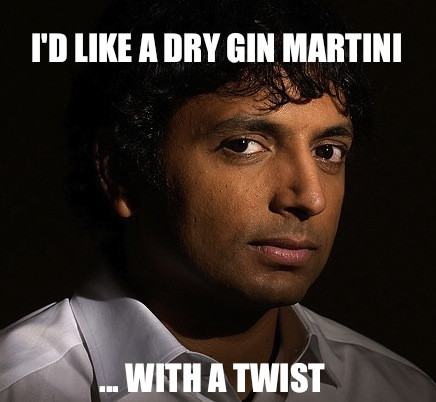
Similarly, the "twist-for-twist's-sake" ending (employed most famously in the works of M. Night Shyamalan) is almost always a poor choice. In most situations, a gigantic twist at the end of a story simply negates everything that came before it. It signifies that everything we've just read or watched didn't really matter. Who wouldn't feel betrayed by that?

If you're writing a mystery, misdirection can be good. In fact, some degree of it is expected. Mystery as a genre challenges the reader to figure out the truth before the protagonist does. But really, that's not the type of misleading I'm talking about here. In a mystery, a clue is presented as possibly true. The detective eyes every piece of information with suspicion, and so does the reader. And more importantly, the detective and the reader are aware of the same things. The detective does not hide anything from the reader.

What I'm against is unreliable narrators--unless they are a character in their own right. Let me explain. (If you've read my articles about Narrative Mood and Point of View, you might be able to guess where I'm going with this.)

If your narrator is going to lie to the reader, they have to have a motive. If the narrator is simply you, the author, then your only possible motive is to seem clever to the reader. True, readers do like surprises, but not when they arise out of an effort to be cute. It's the literary equivalent of a pun. Readers get it, but it makes them groan internally.

Readers expect a disembodied, non-character narrator to be impartial. Whether that narrator is omniscient or not, they exist merely to recount events as they happen. When they disregard that task, their reason for existing is called into question, and the fourth wall breaks down.

However, if your narrator is a character in their own right, they might have any number of motives to lie. As a character--even if they're not directly involved in the story--they are behind the fourth wall, and thus their disingenuous narration does not break the fictive dream.

As with so many of these commandments, this boils down to avoiding any practice which makes the reader aware of you instead of the story. The joy of reading fiction is that you become immersed in another world, and anything that threatens that threatens the joy of reading.

So don't lie to your readers. By all means, have your characters lie to them, but don't do it yourself. (Like this quote? Click here to tweet it!)

2/22/2016

The Ten Commandments of Fiction Writing, Part Four

As a student of the art of fiction, there are several axioms and pieces of advice that I come across again and again; "show, don't tell", "write what you know", "don't trick the reader", etc. These aren't items from a single book, they're everywhere. Some of them surely originate with specific authors, but as ideas they've taken on a life of their own, becoming more than something one person said.

In this series, I will try to gather all those admonitions, encouragements, and adages into a single, definitive list; the Ten Commandments of Fiction Writing. Hopefully this will be as fun and educational for you as it is for me.

-----

Commandment Four: Thou shalt honor the reader as thyself


We've already touched on this issue in Commandments One and Three, but in case it's not obvious, all these commandments are connected. In fact, I could probably have boiled them down to fewer than ten, but then I wouldn't be able to use all these dank Ten Commandments memes I made.

In any case, there's still plenty to say about respecting the reader. It's essential to be the path of least resistance and give your readers what they want--a story. And it's important to assume the reader is intelligent, and able to pick up nuances on their own. But that's not all there is to it.

Whether to write for one's self or for potential readers is a question many authors ask themselves. And unfortunately, the debate usually takes the shape of artistic integrity (writing to please yourself), versus commercialism (writing to please audiences). Of course, it isn't that simple, and like many things, you can and must have it both ways.

Yes, write for yourself. Write what you know, and what you like. Write something you would like to read. If you don't like what you're writing, it's going to turn out bad, period. Readers sense disdain for the material, even if they can't put their finger on it.

But you can't just write for yourself, at least not if you're trying to make a living off your art. Heck, even if writing is something you do in your spare time, you surely do it because you aspire to have your work read by someone who other than yourself. If you write for yourself only, chances are you don't spend much time on writing advice websites like this one.

If you want the attention of readers, you have to create something worth paying attention to, and you have to make it easy to pay attention to, or nobody will. That means writing simply and clearly. That means being as original as you can. That means not intruding on your story, or doing any of a dozen other things that drive readers away. Remember, people are looking for reasons to put your book down. Don't give them any (Like this quote? Click here to tweet it!)

Writing for the reader does not mean pandering to trends. It does not mean aping whatever is on the best-sellers list that week. It does not mean trying to copy the style of an already successful author. These things might get you a few sales from readers who are so addicted to a particular genre, style, or author that they'll buy anything that fits the mold. But they won't get you the recognition you're really after. And they'll brand you for life as a copycat. Even if you go on to create something startling and worthy, people's low expectations of you will be a big hurdle to get over.

So when I say "honor the reader", I don't just mean you should write clearly and avoid intrusions. I mean you should remember what you're doing when you write a story. You're creating something that has the power to induce lifelike experiences in others. Make sure you're giving them an experience worth having. And remember that writing lasts more or less forever. That's the sacred power of the written word. A thing said is gone the minute it escapes your lips. A thing written can withstand the test of time. Make sure you want it to.