Showing posts with label plotting. Show all posts

7/04/2016

The Long-Term Approach to World-Building


Writers who use contemporary settings often set their stories in places they've lived, because they know the little back-alley details that make those places come to life. They populate their stories with people they know, or alternate versions of themselves; look at how many Stephen King books are centered on novelists from Maine.

Historical fiction writers have the treasure trove of human history to delve into. They can cherry-pick people, places and happenings to fill their stories. Today, writers can even take virtual tours of places they've never been using Google Maps, or learn a foreign land's history on Wikipedia. Wherever and whenever a story is set, there's a ton of information on it at a writer's fingertips.

...unless you set your stories in the future, or in mythical lands that never existed. We always hear that you should write what you know, but that old adage takes on a very different meaning for fantasy and sci-fi writers.

Spec-fic authors must engage in thorough world-building. For every fact a contemporary fiction author can look up, spec-fic writers must invent one. (Like this quote? Click here to tweet it!)

It's a tall order even for the most imaginative person. I'm often asked how to go about world-building, and unfortunately there's no simple answer. I like to think I'm pretty imaginative, but the truth is world-building is a long, slow process of compiling tidbits of information, most of which will never see the light of day. But there are a few general strategic tips I can give that have made my world-building experience a little more fruitful.

Take it slow.


Don't sit down to your NaNoWriMo project on November first and start trying to build a fictional universe. Rome wasn't built in a day, and neither was Narnia or Ringworld. These things take time, and it's best to start long before you ever try to set a story in the worlds you create.

You won't be able to flesh out a setting all in one go. As James Scott Bell would say, you have to send it to "the boys in the basement". Even when your conscious mind is preoccupied, your subconscious never stops working. Let your world-building goals stew in your head, and allow tasty morsels to bubble to the surface a few at a time. One way to do this is to...

Keep a world-building journal.


I use Google Keep, but Evernote or a good old-fashioned Moleskine notebook might be the solution for you. Use whatever you're comfortable with, just make sure it's something you have handy all the time. You can't expect to keep a day's worth of ideas in your short term memory while your idea journal waits on your desk at home. You're going to forget something.

I have a terrible memory. I always have ever since I can--or can't--remember. For most of my life it was just a cross I had to bear; people were always getting hurt because I forgot something they wanted me to remember. Understandably, they thought I didn't care about their lives.

Now, I've outsourced most of my memory to Google Calendar, Keep, Mindly, and Any.Do. And every time some setting tidbit comes to my attention, I write it down. Sometimes these are ideas that come to me unbidden and without method--something the boys in the basement send up as a surprise. Other times, it's something I've been trying to think of for days. Still other times, I'll experience some piece of sensory information--a smell or an odd sound--that piques my interest. I keep a "Sensory Info" log where I dump all this stuff, and over time I gradually digest it into my setting notes.

Just today, for example, I noticed how the crawfish chimneys in my yard have become so thickly clustered that the dirt looks like brown cauliflower. Now that the ground is dry, they crunch underfoot like gravel. You can expect to see a description of that phenomenon in one of my stories some day. Only they won't be crawfish, they'll be some strange alien bugs.

Which leads me to my next strategy:

Tweak real-world details.


Just because you're a spec-fic author doesn't mean the wealth of information available to the modern human is useless to you. If you read or hear something interesting in the news, think about how a similar event might play out in the future, or the mythic past. How would the latest mass shooting have been different in the middle ages? In a police-state future, what additional hoops would shooters have to jump through to wreak their sad revenge on society?

If you see an object or place that catches your interest, think how it might be different in a spec-fic setting. Does the neighborhood coffee shop have a reason to exist in Middle Earth? If so, what would be on the menu?

Read history, and think how certain leaders would have acted differently in different time periods. How would World War II have been fought if Hitler was an evil wizard, or a genocidal AI?

Everything in today's world can be useful to you, if you get in the habit of asking yourself the right questions.

Set all your stories in a single fictional universe


This might be considered cheating, but it works for me. All my stories are set in the same universe, even if that fact is never advertized to the reader. Ideally, the reader isn't required to know that.

The main reason I do this is because I really admire writers--like Isaac Asimov or Frank Herbert--who developed a consistent story universe that spans multiple books or series. But as I've fleshed the setting out more and more, I've realized that it also makes it easier to build settings for individual stories. With an ever-growing story world, I never have to start from scratch, and every story adds its own cache of details to the whole. Keeping stories in a single universe might sound hard, but I've actually found it's easier than going back to the drawing board every time.

Another fringe benefit of this strategy is that when I flesh out one little corner of my story universe, it will occasionally throw light on some other corner that I never intended to discover. Developing the setting for a story often means coming up with imaginary histories, and sometimes those histories can inspire other stories, unexpectedly link up with other works in progress, or become new stories in their own right.

The one downside to this strategy is that I actually have too many ideas. I will surely die before I see all of them put to good use. But...so what? Even if some of this stuff never sees the light of day, its existence still makes my job easier. My own awareness of the story universe deepens and informs the little tidbits I show to readers. So long as I don't make my imaginary history a prerequisite for enjoying my stories, there's no harm.

***

Whether or not the above strategies are helpful to you, one thing is for sure; world-building is not a quick or easy job. It's going to take a lot of time and effort, so it's best to adopt a long-term strategy and not expect fast results. But if you're patient, and you pay attention, you can create a world as real--or more so--than anything in contemporary fiction.

6/27/2016

How to Cut the Info-Dumps


Info-dumping is one of the biggest stumbling blocks in a first draft--especially if you're a pantser, and you're working out all the characters and settings as you go. Even if you've made careful, thorough character sketches ahead of time, you'll still discover new things about your characters as you write them. The same goes for your story world. If you're doing a good job of integrating your setting into your plot, you will find yourself exploring all manner of back alleys and sordid histories.

This is all part of the process, but some times the resulting text isn't terribly gripping for the reader, or is simply isn't necessary. Nobody enjoys reading long-winded blocks of characterization or exposition. Imagine if you met someone at a party and they immediately wrapped their arms around you and started whispering in your ear about their emotional problems. Or if you moved to a new apartment complex, and one of your neighbors cornered you and started spilling the last year's worth of gossip. It would be super awkward in real life, so why should it be acceptable in fiction?

Part of the problem is that info-dumps bring your story to a screeching halt so you can deliver a lecture (Like this quote? Click here to tweet it!). Nobody wants to pause a chase scene to consider some novel fact about the fruit stand the bad guy just crashed through. We want to get on with the show.

Furthermore, info-dumps are actually counter-productive. If you force feed your reader hulking blocks of information, they'll probably wind up tuning you out. Even if they don't, no reader is going to remember everything, so by the time a piece of backstory becomes relevant, they may have forgotten it.

The solution is to mete out your characterization and exposition in moderation. Give your readers only what they need, when they need it. In real life, we don't read a person's biography the day we meet them. We don't memorize maps and history books before we move to a new city. We just dive in head first and learn as we go. Make it the same way for your readers, and your book will start to feel real.

Characterization and exposition are yet another show and tell issue. Whenever possible, find a way to show us things about a character. Don't tell us the character is a lazy slob, show him tripping over a pile of dirty clothes while eating a slice of pizza that's been sitting out all night. Not only will the message come across clearer, but you will involve us in the story by inviting us to draw our own conclusions about this guy.

We're all guilty of overdoing things in first drafts. So how do you deal with it in editing?

First off, when you cut out long passages of characterization and exposition, don't simply delete them. They might contain insights you can use later. Keep all the parts you cut in a separate document. If you use character and setting sheets like mine, copy characterization into the relevant character sheet, and exposition into the relevant setting sheet. Long info-dumps aren't welcome in a story, but they make great notes that you can use to inform your decisions moving forward.

Look for any long, unbroken paragraphs. Anywhere you spend a lot of time in the narrative voice, you might be info-dumping. In general, I try to start a new paragraph every time there would be a camera cut if my story were a movie. Any time I see a long paragraph in my own work, chances are there's some info-dumping going on.

That won't always be the case, but it's a good rule of thumb to look for excessive characterization and exposition in passages of narrative. Dialogue and internal monologue will convey information about your characters, but they do so unobtrusively. In fact, dialogue and internal monologue are the best ways to get your characters across, so you don't really want to cut it unless it's just too much at once.

...and if you're going to show people doing things, why
not show them doing AWESOME things?
With settings, you should always try to show people doing things. Don't tell us about an environment, find some way for a character to interact with it. Don't give us a history lesson, make someone need information about a place's history. Make that information mean something in the present.

There are no hard and fast rules on how to write characterization and exposition, or on how to cut them out when they're clogging up your story. The result you're going for is characters and settings that come to life without you ever conspicuously throwing the "on" switch. You don't want readers to know about your characters, you want them to feel their emotions. You don't need readers to pass a quiz on your setting's history, you want them to feel like they've lived there. So just toss your readers into the fray and let them sort it out. They can handle it in their real lives. Assume they're intelligent enough to handle it in your story.

6/13/2016

3 ways to Plot a Short Story


Many (if not most) fiction authors begin their careers writing short stories before moving into novels. For most of the 20th century, it was almost a requirement to start out this way; write and publish enough short stories to build a name for yourself, then move on to longer books and a publishing contract.

The system works a little differently now. Big magazines don't publish as much fiction as they used to, and fiction-focused periodicals are fewer in number, and their readerships are smaller Anthologies are everywhere, but again, the readership isn't huge. You're not likely to see a themed anthology in the top ten any time soon.

But there's still a big niche for short stories today. The simplicity and affordability of online self-publishing makes it easy to send your short story out into the world. It also means the fiction market is saturated with poorly-conceived, poorly-executed material.

So how do you stand out from the crowd? How do you win the hearts of readers? How do you edge out the competition when submitting to a magazine or anthology?

There's no secret sauce, of course. It's the same as anything else: success is a lot of hard work, and a little luck.

For me, hard work has always taken the form of learning and applying technique. I love books about the craft, but I've found there's a shortage of writing advice on the short story form in particular. Recently, I read Let's Write a Short Story by Joe Bunting of the website The Write Practice. It wasn't a bad book, but I was a bit disappointed. I went in hoping for a detailed breakdown of how short story structure differs from novel structure, and how to approach plotting and editing a short. Instead, I found the same old advice about submitting, self-editing, and staying on task. It was good advice, but I've heard it all before (and written about it too).

Luckily, I've had some ideas about short story structure churning in my head for a while, and my disappointment with Let's Write a Short Story has motivated me to share them.

Why bother plotting a short story at all?


I mean, it's short, right? Why go to the extra effort?

Well, if you're like me, plotting is as much a habit as it is deliberate practice. It's hard for me not to plot. But even if that isn't true for you, any story, no matter how short, is worth sketching out in advance. I firmly believe that good stories are like icebergs: the reader only sees the tip, but there's a vast framework beneath. (Like this quote? Click here to tweet it!)

And as I've said before, it's easier to work out kinks in an outline than in a story. Your first idea is rarely your best, so when you're approaching a story it pays to sketch it out first and revise a few times before committing anything to the page.

So how should short stories be structured? I've thought about it, and I'm pretty sure there are three general ways to do it.

Compressed Four-Act Structure

If you haven't read my series on story structure, this might not be familiar to you. Please go read it, it's awesome and everything I say is 100% right, because I'm super smart.

Anyway, traditional story structure can be compressed down to a shorter format. When plotting out signpost scenes and major turning points, you try to express what you need to as simply as possible. Instead of an entire scene or series of events at Turning Point One, you write just a single moment that changes the game. Instead of a whole Save-a-Cat scene, you write one moment, maybe just one line of dialogue that will engender sympathy for your protagonist.

I tried this strategy when I wrote my short story Deep (available from major retailers!). The story began with a couple bickering, and to create sympathy, I had the main character apologize to an android that overheard the argument. Apologizing to a robot is meaningless, of course, but it showed that she was embarrassed, and embarrassment is sympathetic. That was the idea, anyway. Buy it, and let me know if it worked!

Compressed story structure can work on a surprisingly small scale. With Deep, I crammed my entire four-act structure into about 5000 words. Four act structure is more about proportion than amount. As long as the important turning points are spaced right, it doesn't really matter how much story they contain. The resulting rhythm will still feel familiar.

The Vignette

A popular form with literary fiction authors and art house filmmakers, the vignette isn't really a story in the technical sense. It's really just a single scene intended to highlight a particular theme, emotion, setting, or character.

Vignettes can be done well, but they are often misused. Sometimes, authors will write vignettes as a way of exploring a setting or character, but nothing interesting happens in the resulting story. The writer merely describes a person or place, and perhaps gives us some interesting bit of backstory or exposition, but there is no narrative present. Vignettes like that are useful to write, but not very interesting to read. They're notes, really, not proper writing.

Remember; the key to good fiction is conflict. To keep readers interested, something has to be wrong, and it has to be wrong now, not in the murky, shapeless past. If you can't find the conflict, you're writing notes, not a story.

Good vignettes will paint a detailed picture of a theme or emotion. In Coffee and Cigarettes, Jim Jarmusch uses the vignette to explore the theme of awkward, tenuous conversations. The scenes he presents vary widely in tone, but at the heart of all of them there is some form of uncertainty, and that provides the conflict.

Vignettes can be extremely short, or relatively long. The thing that makes them vignettes is that they happen in a single time and place. A long vignette can be a riveting slow burn if you lay the tension on thick enough. Think of the opening scene in Quentin Tarantino's Inglorious Basterds. That scene would probably make an amazing short story.

The key to using a vignette effectively is to keep the tension in focus. Even in the longest vignette, there's really no room for exposition. Get to the conflict, and let the reader stew in it until the scene comes to its close. Afterwards, the emotion you developed will still be ringing in their ears.

Sequence Structure


If you haven't read my article on sequence structure, here's a brief summary:

A Sequence is a group of related scenes. It consists of two phases, Action, and Reaction.

The Action Phase has three parts: A Goal, some kind of Conflict that impedes the character's progress toward that goal, and some Outcome (usually bad) that results from the conflict.

The Reaction Phase also has three parts: An emotional Reaction to the outcome, a period of Deliberation on what to do next, and a final Decision, which provides the next goal.

For more, read my article, or check out K.M. Weiland's series on this topic (I think my terminology is easier than hers, but the idea is the same...because I stole it from her).

Sequence structure as a short story plotting framework is new for me. I haven't actually written anything I've plotted this way (I've plotted, but I haven't actually written). But knowing how well this framework translates into novels, it stands to reason that it's a good way to write a short story. Gripping stories all have that domino-effect feeling, whether they're short or long.

In a novel, you typically have several main sequences linked up by smaller ones. The smaller ones can be cut short or interrupted, but the main ones should usually proceed unhindered. In a short story, I think you probably just need one, or one and a half. Let me explain.

The beginning of any story needs some kind of hook. Something has to be wrong right away or the reader isn't likely to get interested. To me, either a goal or an emotional reaction can provide this.

A goal is a desire with a plan. It can be established quickly, and then you move right into conflict. A goal in itself is already something wrong: wanting something means you don't already have it. Depending on what your character wants, that can be enough right there. Imagine a story starting off with one character wanting to kill another. That's conflict!

In sequence structure, the emotional reaction is a direct result of the preceding outcome. If the outcome is usually bad, that means the reaction is already fraught with conflict. You could open on a character fuming with frustration, buried under anguish, or blinded by rage. If you paint a good picture of what this person is like when they're frustrated, depressed, or enraged, you will supply a vivid portrait of the character (which is good to do early on), and you'll be starting with internal conflict that a reader can sympathize with.

Whether you start on Action or Reaction, all you need to do from there is proceed in the natural order. In a short story, I don't think it's a good idea to interrupt the flow of sequence structure. That might work in novels, because you have plenty of time to tie up any loose ends you leave dangling. But even meaty short stories need to be relatively compact. If you feel the need to interrupt or break sequence structure, maybe what you're writing would work better as a compressed four-act structure, or even a full novel.

Wherever you begin, I feel it's probably best to end on an outcome. This seems natural, because an outcome is more or less a synonym for an ending. You could end on a decision, but you'll want it to be one of those momentous, life-changing decisions that portends great or terrible things. Executed properly, a decision can create a resonant ending, which you always want. In general, though, I'm willing to bet readers will prefer ending on some kind of result.

So if you want to start with the Reaction Phase, your outline might look something like this:

  • Reaction: Bob is angry at Sheila for sleeping with Dave.
  • Deliberation: Bob goes back and forth about whether or not to kill one or both of them.
  • Decision: Bob decides to kill them both.
  • Goal: Bob wants to kill Dave and Sheila, so he goes to buy a gun.
  • Conflict: The gun store owner knows Bob, and is suspicious about his motives for buying a gun.  
  • Outcome: Bob takes his anger out on the store owner, and winds up getting arrested.

If you want to start with the Action Phase, your outline might look something like this:

  • Goal: Bob wants to Kill Dave and Sheila, so he goes to buy a gun.
  • Conflict: The gun store owner knows Bob, and is suspicious about his motives for buying a gun.  
  • Outcome: The owner refuses to sell Bob a gun.
  • Reaction: Bob's anger intensifies.
  • Deliberation: He thinks of other ways to kill Dave and Sheila.
  • Decision: Bob takes a knife from his kitchen and waits for Sheila to come home.
  • Goal: Bob wants to kill Sheila.
  • Conflict: Sheila returns home with their kids.
  • Outcome: Bob can't kill her in front of the kids. He buries his anger, and we're left with the sense that life from then on will be very different.

Okay, maybe those aren't really great stories, but they illustrate my point. Sequence structure is an adaptable framework that allows you to create a domino effect of any length. This makes it perfect for short stories, because their length varies.

***

I've thought a lot about short stories. I'm a lifelong fan of story cycles like Bradybury's Martian Chronicles and Asimov's Foundation Trilogy (which is actually a collection of related short stories). But for whatever reason, there just isn't much material out there about how to write and structure them. There are hundreds of books about how to write a novel, but the only book I found on writing short stories had more to say about the publication process than the task itself.

These three structures are all I can come up with. They each have their strengths and weaknesses, but when I plot short stories, it's always in one of these ways.

How about you? How do you plot short stories, if you do it at all? Can you think of any other structural frameworks I could include? Comment and let me know!

5/16/2016

The Plotter's Manifesto

Writers are defined by their approach to the task.  On one end of the spectrum, you have the Pantsers (thanks to James Scott Bell for introducing me this distinction), who sit down to a blank page and just go.  Sounds easy, right?  I don't think so, but the reasons why are the subject of another post.

On the other end, you have Plotters, who range from people who write simple, hand-drawn idea webs, to people like me, who spend months devising detailed spreadsheets, building templates, writing mini-scenes to develop characters, and generally making themselves look crazy to any outside observer.

Figuring out whether you are a Pantser or a Plotter--or somewhere in between--is one of the first tasks you should undertake when you start your journey as a writer.

highly recommend becoming a Plotter. You don't have to be as obsessive as me, but plotting saves you great hulking slabs of time, effort, and indecision. 

Wait, plotting saves you time?  How can that be?

Alright, the truth is plotting does put more distance between you and actually writing your story, but it's worth it. When you start from a suitable plan, your first draft will be better, which means you'll delete less, and spend less time reworking pages that fall short.  In the long run, you'll write more, because you won't spend so much damn time wrestling with a slithering mess of a novel.

Even a relatively straightforward novel can be a convoluted, multifaceted, byzantine thing when you're creating it.  When you're in the thick of it, ideas are firing off in your brain at random; you get ideas in the shower, ideas in bed, ideas when you're out to dinner.  Character motivations are gradually refined, plot turns are tested and rejected, locations are changed.  Think about it; would it be easier to do all that shuffling around in a novel, or an outline?

True, even the best plotted novel will go through some unexpected transformations after being written.  That's part of the process.  But the first ideas are seldom the best, and I find it's better to get those worked out in bullet list form.  A professional Pantser might take a book through seven complete drafts before it's ready to see the light of day.  Plotting can potentially cut off two or three of those drafts, and cut down on developmental edits.

If you're ready to begin your journey as a Plotter, check out my series on Story Structure.

5/09/2016

How to Structure Scenes

Last week I took a little break from my regular posting schedule, because I've been working on a very exciting project. More news to follow. In any case, I'm back now, and I decided to take the next few weeks to feature some resources from the site. Most of what you'll be seeing over the next few weeks is permanently hosted here, but I'm going to feature a few selections that cover some of the most important issues I've encountered.

***

If you've read my series on Story Structure, hopefully you feel confident about the types of scenes you can and should include in your story.

But what about structuring the scenes themselves? If there's a macro-structure to a story, surely there must be a micro-structure?

Thankfully, there is. Traditionally, what I'm about to discuss is known as Scene and Sequel, but I've always disliked that term.  K.M. Weiland did a series on this concept, and in it she differentiated between two definitions of scene: Scene, being the first phase of the Scene-Sequel model, and scene being what we commonly refer to as scenes, I.E. a series of related events that take place in a single specific setting.

Are you confused yet? Because I was. (No offense to Weiland, it's not her terminology!)

Despite the messy terminology, the Scene and Sequel model has enormous advantages. It helps you craft a story where each moment is a link in a causal chain. Great stories feel like they're going to keep moving with or without us, so we pay attention because we don't want to miss anything.

So let's redefine some terms. I'm a stickler for terminology, and any time I see a single term with two different meanings, I go hunting for a superior synonym to regain some clarity. I'm pretty sure I developed this habit as a result of reading the chapter on repetition in Self-Editing for Fiction Writers.

For me, I like the little-s definition of scenes, because when I use the word in everyday parlance, that's what I mean. In my model, a scene is whatever happens in a single time and place. If the time, place, or point of view changes, a new scene has begun.

But Scene and Sequel comprises a group of related scenes, so what to call the whole model? Luckily, I paid attention in Film 101, so I remember that a group of related scenes is called a Sequence.

For the purposes of this model, a Sequence consists of two phases: the Action Phase (Scene), and the Reaction Phase (Sequel).

Sigh.

Now that we have our terminology out of the way, let's get into Sequence Structure. We'll look at the Action Phase first.

The Action Phase begins with a character that has some kind of goal. It could be as simple as getting a bagel at the local coffee shop, or it could be as complex as talking a room of government heavyweights into declaring war. Whatever it is, the first task in any Sequence is to demonstrate a goal.

Next, there will be some conflict that prevents the character from achieving that goal. Something happens to block their efforts, be it the actions of another character, a physical or social barrier, or their own incompetence.

And if there's going to be conflict, it's going to have some kind of outcome. If you want to keep the tension high, this outcome should almost always be bad. The character needs to encounter constant setbacks and diversions, whether minor or major. Occasionally, for whatever reason, the character will need to succeed in some goal, but if they do, you should always try to include some kind of secondary outcome that is a setback. This pattern should hold true right up to the end of your Final Showdown.

So that's the Action Phase:

  • Goal
  • Conflict
  • Outcome

The Reaction Phase begins with--what else?--a reaction. This is some kind of emotional response from the character. If they encountered a setback, maybe they're frustrated or angry. If they achieved some goal, maybe they're elated. These are the moments that will help readers identify wiht your characters.

Sometimes, the reaction will be implicit in the outcome of the Action Phase. And if the reaction is obvious, you don't always have to spend page time on it. But you should know what it is, just to make sure it's involved in whatever you do write. Color your character's thoughts and actions with this emotion. If they're angry, don't show them sniffing daisies and sipping herbal tea.

After the reaction, you have some kind of deliberation. The character reflects on the outcome, and examines their options on where to go next. Sometimes this deliberation will take the form of an internal struggle, sometimes it will be an argument with the character's allies.

Whatever it consists of, the deliberation will eventually reach some kind of decisionwhich in turn provides a new goal. In this way, the Reaction Phase lights the fuse on the next action phase.

The point is to create a domino effect, where every scene has a causal relationship with the next. This provides that feeling of momentum, and keeps the reader hooked.

So that's the Reaction Phase:

  • Reaction
  • Deliberation
  • Decision

In structuring a Sequence, each of the six items (goal-conflict-outcome, reaction-deliberation-decision) could be its own scene. It might feel a little choppy that way, but it's totally possible.

It's also possible for the entire Action-Reaction Sequence to take place within the space of a single scene. It might feel a little slow, but if you keep the stakes high, it can provide delicious tension. Quentin Tarantino is the undisputed master of slow, tense Sequences.

But typically, the Action Phase will be a single scene, and the Reaction phase will be a single scene. To return to an earlier example, the Midpoint Sequence of Harry Potter and the Deathly Hallows presents itself as two scenes.  The Action Phase happens at the Lovegood house:

  • Harry and co enter the Lovegood house with the goal of learning more about the strange symbol they've been seeing.
  • They encounter conflict when Xenophilius seems distracted and inhospitable toward with them.
  • The outcome of this is that Xenophilius has betrayed them and is stalling, and Harry and co must make a daring escape.


The Reaction Phase follows when they finally get back to their tent:

  • The group reacts by being distraught over what happened and disagreeing hotly about the importance of the Hallows.
  • They deliberate over what their next move is, and because of the disagreement, they cannot decide whether to look for the Hallows or continue hunting Horcruxes.
  • But eventually, Harry reaches the decision that the Hallows are of paramount importance, and acquiring them becomes his new goal, even though the others aren't on board.

Then, however, something odd happens. Rather than move forward with his decision, Harry is taken into captivity along with his compatriots and several others. A new Sequence has interrupted the flow of decision-to-goal, and Harry's overall goal of acquiring the Hallows is supplanted by the more immediate goal of keeping his identity hidden from the Snatchers.

This brings up an important point: Sequences do not always need to unfold unimpeded. One can interrupt another--in fact they should. The domino effect can survive a little chaos. Sometimes the outcome of an Action Phase should be a disaster that begins a new Action Phase right away, and the following Reaction Phase can do double duty.

Split streams every now and then, and have one Sequence crash into another. So long as everything flows into the same river by each of the three Turning Points, you're free to do whatever you want. At each of the Turning Points, a full Sequence should go uninterrupted.

A Sequence should nearly always straddle the Act One-Act Two transition. Act One should probably end with an Action Phase, and Act Two should begin with the corresponding Reaction Phase.

The Midpoint Sequence is one of the most important parts of your story, and should not be interrupted either.

Turning Point Three should also be a complete Sequence. The Low Point, Mounting Forces and Hero Gets a Boost scenes should make up the Reaction Phase of the Turning Point Three Sequence.

The last point where you should have an uninterrupted Sequence is at the very end. The Final Showdown should be an Action Phase, and the Denouement should be the corresponding Reaction Phase.

With these major Sequences in place, the most important points of your plot will be sound. Beyond that, Sequence structure is a wild and crazy business, and I advise you to make the most of it.

4/25/2016

How Long Should Your Story Be?

The first time I set out to write a novel I was fifteen. I was taking a writer's workshop class in high school, and I had asked my teacher permission to submit chapters of a single work each month instead of short stories and poems, like most of the other kids.

But like, if I miss this concert, my life is like, over! You'll
 never understand my sophomoric, middle-class problems! 
As you might imagine, I didn't get very far. If memory serves, I turned in two chapters of a Dirk Gently-inspired paranormal detective story, another two chapters of a Final Fantasy-inspired sci-fi/fantasy epic, and by the end of the class I broke down and wrote a bunch of angsty teenage poetry, some of which might have made good emo lyrics.

Part of my problem was that I was fifteen. Part of it was that I didn't know the distinction between Plotting and Pantsing. I figured I could just wing my way through an entire novel, as if a novel is something you just sit down and write, and when you're done it's done.

But a subtler problem was I had no idea how long a novel should be.

This problem stayed with me through college, through my mid-twenties, when I didn't write anything, all the way until the early years of my career. Until about three years ago, I was still thinking of novels in terms of page numbers. But the truth is, that's like measuring your tire pressure by calculating the volume of the tire. (Like this quote? Click here to tweet it!)

novel's page count is up to the publisher. I mean, they can print the entire bible (approx. 750,000 words) in a book about the size of a box of matches. True, you have to read it with a magnifying glass, but it can be done. On the other end of the spectrum, 3 Futures was barely 35,000 words, but Catharsis Fiction fudged it up to 200 pages.

So how long should your story be? That depends on what you want to do with it. If you're trying the traditional publishing route, thoroughly read the publisher's website, contracts, and any other documentation they provide. Chances are, their word-count expectations are in there somewhere. For short story writers, I've found that most markets favor stuff in the 4,000-7,000 range, but that's not a hard-and-fast number. Whatever you're writing, wherever you're trying to sell it, check the market's guidelines first. If all else fails, email the editor and straight-up ask them.

But if you're self-publishing, or if you're not writing for a specific market, it's good to have some idea of what separates a novel from a novella, from a short story, etc. Before I launch into this list, I should note that different genres carry different expectations. Fantasy and sci-fi readers expect and want longer books, and literary fiction is all over the map. But the following list is the general guideline I use to categorize my own writing, no matter what I plan to do with it.

Flash Fiction/Vignette: 1,000 words or less

Flash fiction is intended to highlight a particular moment, idea or emotion. It's intended to be read in just a few minutes, so anything longer than a thousand words is pushing it. There are lots of markets for flash fiction because it's as easy to present as a blog post (and even a troglodyte like me can throw together a halfway readable blog).

Short Story: 1,000 - 10,000 words

Short stories can be anything from an extended vignette that really delves into a particular theme, to a fully structured story that happens over a relatively compact timeline. There are dozens of ways to structure stories in this length range, which is part of what makes them so fun to write. Generally, a short story is meant to be read in a single sitting, two at the most. I find that a meaty short story takes about as long to read as it does to watch an average movie, and I'm a pretty slow reader.

Novella/Novelette: 10,000 - 50,000 words

In my own work, I make no distinction between a novella and a novelette, but some genres do. A novelette is shorter, about 10,000 to 25,000 words. Anything below 50,000 is generally considered a novella. While a publisher might find this distinction important for marketing purposes, I find readers aren't hip to the difference, so for me, the distinction is splitting hairs. I figure anything under 50,000 words can be read in one to three sittings, and will present a short, cohesive series of events without subplots, multiple POV changes, and all the complexities of a full novel.

Novel: 50,000 words or more

Here is where you start seeing major differences between genres. A lot of lit-fic sits down at the low end of this range. Slaughterhouse-Five and Fahrenheit-451 are just a smidge under 50,000. Then again, Alan Moore wrote a draft of a novel that was over A MILLION words long, and he refused to cut it (the self-indulgent bastard). Most sci-fi and fantasy rests between 80,000 and 120,000. Mysteries and pulp novels tend to be shorter. When I set out to write a novel, my default goal length is around 80,000. In other words, I try to make sure there's at least 80,000 words of actual story. For me, this usually means I have to fully develop two, three, or even four POV characters, and include a handful of subplots. As of the time I'm writing this, I have yet to come up with 80,000 words of story centered on a single character. It can certainly be done, but my brain just doesn't work that way.

***

Whatver you're writing, whatever you plan to do with it, it's a good idea to set a goal length, and track your progress toward it. That's the main reason I came up with my Process Breakdown template, which you can download if you wish. However you choose to count words, it's an essential part of being a professional writer. Readers and publishers have certain expectations, and the people who meet them sell more books. Even if you don't give a hoot about expectations, it's good to be specific about your goals, so you know what you have when you achieve them.

3/14/2016

The Ten Commandments of Fiction Writing, Part Seven


As a student of the art of fiction, there are several axioms and pieces of advice that I come across again and again; "show, don't tell", "write what you know", "don't trick the reader", etc. These aren't items from a single book, they're everywhere. Some of them surely originate with specific authors, but as ideas they've taken on a life of their own, becoming more than something one person said.

In this series, I will try to gather all those admonitions, encouragements, and adages into a single, definitive list; the Ten Commandments of Fiction Writing. Hopefully this will be as fun and educational for you as it is for me.

-----

Commandment Seven: Thou shalt know thy characters and settings as thyself


We've all been told to write what we know (and if you keep reading this series, you'll be told again), but that axiom works in reverse too: know what you write.

Part of my problem with pantsing is that when you begin with a blank page, you begin with flat, undeveloped characters (Like this quote? Click here to tweet it!). You might put them into a dramatic situation, but you don't really know how they'll act, and without some kind of plan for character development, you're bound to miss a few opportunities. They might surprise you, which is good, but chances are they won't start surprising you right off the bat.

Characters are the core of your story, and they are the part that readers are most likely to remember. When I read Foxfire as a lonely teenage boy, I fell in love with Maddy and Legs. I missed them when the book ended. I missed them so badly that I actually wasted the time to see the god-awful 1996 adaptation. I don't know if Joyce Carol Oates is a plotter or a pantser, but she damn sure spent some time on the characters in Foxfire. They felt more alive and real than a lot of actual people I've met.

The issue is the same for settings. If you create a setting on the fly, chances are it's going to be pretty drab on the first pass. If you describe anything, it'll probably be the most obvious stuff, and that isn't what brings settings to life. Readers are savvy enough to fill in the obvious details on their own. The key is to provide the details that aren't obvious, and just enough of them to get the reader's imagination going. To do that, you have to get your imagination going.

Settings aren't always the most important element of a story, but they can be powerful if you develop them well. Anyone who's read Lord of the Rings probably wanted to live in Middle Earth, orcs and all. I remember reading those books and vividly imagining all the food, drink, and pipe-weed the characters consumed--heck, I'd be lying if I said it wasn't part of the reason I'm a pipe smoker to this day. Little details like that made the world so real that a part of me never left. Tolkien definitely overdid it when it came to exposition, there's no question, but his setting became part of his reader's lives forever.

While I strongly advise restraint when it comes to including details about characters and settings, it never hurts to generate those details. The only way you can know too much about your characters and setting is if taking notes becomes an addiction, and keeps you from actually writing. And as a borderline OCD case, I can see where that would happen. But when you're plotting, it's worthwhile to research or create as much detail as you can. You never know when you'll see an opportunity for intrigue. It's the Pantry Method again; gather all the information you can, and only show readers the really interesting bits. The rest will be there if you need it, and if you don't so what?

For me, a well-defined task is essential. That's why I took the time to build templates to help me in this process. I've tried to ask myself every possible question, and when I'm plotting a story, I answer as many as I can. If that sounds helpful to you, Check out my Plotting Resources page, where you can download all of my plotting templates.

Even if you're not a plotter, you need to find a way to get into your characters and explore your settings. Without them, your book is a synopsis at best.

1/25/2016

Proportion

First off, I'd like to apologize for taking a break last week, I've been trying to wrap up some freelance work that's been hanging over my head. But I'm back, and I've got a lot cooking.

Next week, I'm going to debut a new series of posts called The Ten Commandments of Fiction Writing. They'll likely be shorter posts than usual, but hopefully it'll be a fun way to look at some fundamental issues. Stay tuned!
----------
This week I want to talk about a concept that revolutionized my understand of fiction: Proportion. Like many important concepts, proportion was first introduced to me by Dave King and Renni Browne, in their book Self-Editing for Fiction Writers, which is one of the most important parts of my Writing Bible. It's another one of those ideas that seems obvious once you've been told about it, but before that you probably never thought of it.

Simply put, proportion is about controlling how many words/paragraphs/pages you spend on what. The more time you spend talking about a thing, the more important it will seem to readers, and the more likely they'll be to remember it after they finish the book. Proportion works on a macro scale and a micro scale. Let's take a look at the macro scale first.

In Self-Editing, Browne and King give a great example of proportion on a macro scale. It goes something like this: A woman wrote a very long novel, and her editor told her to trim it down by cutting out some of the less relevant scenes. So the writer cut out all the cooking scenes, all the shopping scenes, all the driving scenes, and everything that she had added 'just for flavor'. The book, while not necessarily 'romance', centered on a romantic relationship, so the author left all the sex scenes in, as she felt they were relevant to the plot. The result was that by simply cutting a handful of scenes out, her novel had transformed from a work of contemporary fiction into a steamy work of erotica. Her editing had thrown the book out of proportion.

When you're writing a novel, it's easy to forget exactly what you've already written. We don't write novels in one go, it's a process of weeks, months, years, even decades. But for readers, a novel is a much more compressed experience, and if they hear about a thing over and over during that time, they will naturally assume it's important.

If you write with an awareness of proportion, this can work to your advantage. Your main character is the most important, so you spend the most time in his or her point of view. If your theme revolves around the ugliness of war, you can and should spend a lot of page time depicting grisly scenes of battle and human suffering. If your theme is about love, you can and should spend more page time on scenes of your romantically-entangled characters doing whatever brings them together.

But since we write novels over a period of time, we sometimes forget what we've already emphasized, and this can lead to proportion problems. In my current work-in-progress, I'm exploring my character's motivations for remaining faithful to his religion, even though he's a bit of a misfit in the church. I have a number of scenes where he introspects about how the church (and God) saved his life when he was younger, and how he feels a great debt and responsibility to the church because of this. After having several people beta-read the novel, a couple of them asked if this novel was just my way of proselytizing about Christianity. And that wasn't my aim at all. But because I spent so much page time on a character affirming his faith, the book seems like an endorsement of that faith.

Now that I'm to the editing stage, I can go back and trim out, or at least trim down a few of these scenes. I can make sure I don't repeat myself, and ultimately I'll bring everything back into proportion.

On a micro scale, proportion affects how easily a scene reads. Many of us have read books where the author gives us a blow-by-blow account of something relatively mundane.

Jason inserted his key into the lock and turned the knob to the right, The door opened and he stepped inside. The smell of roasting chicken greeted him. He set the mail and his keys on the table by the door, then rounded the corner into the kitchen.
"Smells amazing," he said. 

This passage could just as easily have read:

The smell of roasting chicken greeted Jason when he walked inside.
"Smells amazing," he said as he rounded the corner into the kitchen.

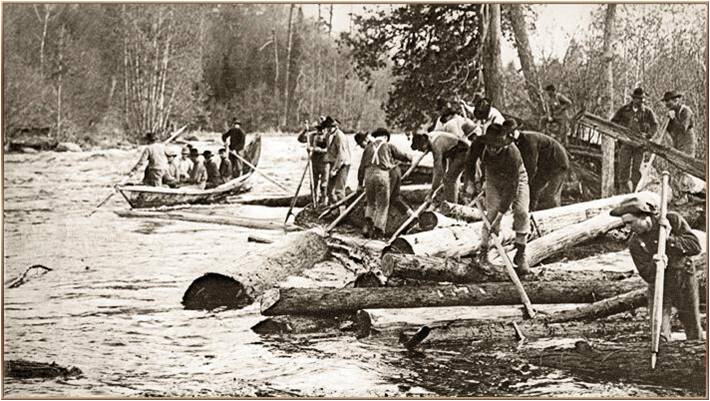
Even if the facts are important, we don't always need to read about them in detail. Readers are smart, on the whole (because reading makes you smart), and they can fill in some of the details themselves. Browne and King use an example where a man is rescuing another man from a river. The scene describes the rescuer's movements as he throws the injured man over his shoulders and traverses a series of logs to get to shore. It's an exciting moment, but the author spends so much time detailing how the rescuer hops from one log to another that you start to get bored. Browne and King suggested the author condense all that action down into a single sentence: "He made his way across the logs."

There are two good reasons to watch your micro scale proportion. First, you don't want to bore readers by making them read every physical action your character goes through, or every thought that passes through their head (that's one I see a lot in my editing career). Second, you don't want to rob the reader of the opportunity to fill in the gaps themselves. It's one of the joys of reading. If an author writes a tense dialogue between two characters, but leaves out most of the internal monologue, I get to experience the pleasure of imagining what each character might be feeling.

Take this famously tense scene from Quentin Tarantino's Inglorious Basterds. In it, we watch in horror as Hans "The Jew Hunter" Landa has a seemingly civil conversation with a farmer about a missing Jewish family. As the scene develops, we see the farmer growing more and more nervous, yet Landa remains cool and calm. By the time we're a couple minutes into their exchange, we know the farmer is either hiding the missing family, or knows where they are. But the conversation never explicitly tells us that. We pick it up purely on subtext, by watching the characters' body language. Imagine if Tarantino had cut into that scene with an obnoxious voice-over and explained what each character was thinking. Wouldn't that completely take the wind out of the scene's sails?

That type of voice over would be the cinematic equivalent of author intrusion (which I touch on in this article), but it's a proportion issue as well. Don't spend precious page time telling readers the things you could be showing them. And don't waste time showing them anything they can supply on their own, because it saps the joy out of the experience.

Properly proportioned stories hold our attention. They don't take detours explaining things we don't need to know, or waste our time showing us things we could skip.