Showing posts with label setting. Show all posts

7/04/2016

The Long-Term Approach to World-Building


Writers who use contemporary settings often set their stories in places they've lived, because they know the little back-alley details that make those places come to life. They populate their stories with people they know, or alternate versions of themselves; look at how many Stephen King books are centered on novelists from Maine.

Historical fiction writers have the treasure trove of human history to delve into. They can cherry-pick people, places and happenings to fill their stories. Today, writers can even take virtual tours of places they've never been using Google Maps, or learn a foreign land's history on Wikipedia. Wherever and whenever a story is set, there's a ton of information on it at a writer's fingertips.

...unless you set your stories in the future, or in mythical lands that never existed. We always hear that you should write what you know, but that old adage takes on a very different meaning for fantasy and sci-fi writers.

Spec-fic authors must engage in thorough world-building. For every fact a contemporary fiction author can look up, spec-fic writers must invent one. (Like this quote? Click here to tweet it!)

It's a tall order even for the most imaginative person. I'm often asked how to go about world-building, and unfortunately there's no simple answer. I like to think I'm pretty imaginative, but the truth is world-building is a long, slow process of compiling tidbits of information, most of which will never see the light of day. But there are a few general strategic tips I can give that have made my world-building experience a little more fruitful.

Take it slow.


Don't sit down to your NaNoWriMo project on November first and start trying to build a fictional universe. Rome wasn't built in a day, and neither was Narnia or Ringworld. These things take time, and it's best to start long before you ever try to set a story in the worlds you create.

You won't be able to flesh out a setting all in one go. As James Scott Bell would say, you have to send it to "the boys in the basement". Even when your conscious mind is preoccupied, your subconscious never stops working. Let your world-building goals stew in your head, and allow tasty morsels to bubble to the surface a few at a time. One way to do this is to...

Keep a world-building journal.


I use Google Keep, but Evernote or a good old-fashioned Moleskine notebook might be the solution for you. Use whatever you're comfortable with, just make sure it's something you have handy all the time. You can't expect to keep a day's worth of ideas in your short term memory while your idea journal waits on your desk at home. You're going to forget something.

I have a terrible memory. I always have ever since I can--or can't--remember. For most of my life it was just a cross I had to bear; people were always getting hurt because I forgot something they wanted me to remember. Understandably, they thought I didn't care about their lives.

Now, I've outsourced most of my memory to Google Calendar, Keep, Mindly, and Any.Do. And every time some setting tidbit comes to my attention, I write it down. Sometimes these are ideas that come to me unbidden and without method--something the boys in the basement send up as a surprise. Other times, it's something I've been trying to think of for days. Still other times, I'll experience some piece of sensory information--a smell or an odd sound--that piques my interest. I keep a "Sensory Info" log where I dump all this stuff, and over time I gradually digest it into my setting notes.

Just today, for example, I noticed how the crawfish chimneys in my yard have become so thickly clustered that the dirt looks like brown cauliflower. Now that the ground is dry, they crunch underfoot like gravel. You can expect to see a description of that phenomenon in one of my stories some day. Only they won't be crawfish, they'll be some strange alien bugs.

Which leads me to my next strategy:

Tweak real-world details.


Just because you're a spec-fic author doesn't mean the wealth of information available to the modern human is useless to you. If you read or hear something interesting in the news, think about how a similar event might play out in the future, or the mythic past. How would the latest mass shooting have been different in the middle ages? In a police-state future, what additional hoops would shooters have to jump through to wreak their sad revenge on society?

If you see an object or place that catches your interest, think how it might be different in a spec-fic setting. Does the neighborhood coffee shop have a reason to exist in Middle Earth? If so, what would be on the menu?

Read history, and think how certain leaders would have acted differently in different time periods. How would World War II have been fought if Hitler was an evil wizard, or a genocidal AI?

Everything in today's world can be useful to you, if you get in the habit of asking yourself the right questions.

Set all your stories in a single fictional universe


This might be considered cheating, but it works for me. All my stories are set in the same universe, even if that fact is never advertized to the reader. Ideally, the reader isn't required to know that.

The main reason I do this is because I really admire writers--like Isaac Asimov or Frank Herbert--who developed a consistent story universe that spans multiple books or series. But as I've fleshed the setting out more and more, I've realized that it also makes it easier to build settings for individual stories. With an ever-growing story world, I never have to start from scratch, and every story adds its own cache of details to the whole. Keeping stories in a single universe might sound hard, but I've actually found it's easier than going back to the drawing board every time.

Another fringe benefit of this strategy is that when I flesh out one little corner of my story universe, it will occasionally throw light on some other corner that I never intended to discover. Developing the setting for a story often means coming up with imaginary histories, and sometimes those histories can inspire other stories, unexpectedly link up with other works in progress, or become new stories in their own right.

The one downside to this strategy is that I actually have too many ideas. I will surely die before I see all of them put to good use. But...so what? Even if some of this stuff never sees the light of day, its existence still makes my job easier. My own awareness of the story universe deepens and informs the little tidbits I show to readers. So long as I don't make my imaginary history a prerequisite for enjoying my stories, there's no harm.

***

Whether or not the above strategies are helpful to you, one thing is for sure; world-building is not a quick or easy job. It's going to take a lot of time and effort, so it's best to adopt a long-term strategy and not expect fast results. But if you're patient, and you pay attention, you can create a world as real--or more so--than anything in contemporary fiction.

6/27/2016

How to Cut the Info-Dumps


Info-dumping is one of the biggest stumbling blocks in a first draft--especially if you're a pantser, and you're working out all the characters and settings as you go. Even if you've made careful, thorough character sketches ahead of time, you'll still discover new things about your characters as you write them. The same goes for your story world. If you're doing a good job of integrating your setting into your plot, you will find yourself exploring all manner of back alleys and sordid histories.

This is all part of the process, but some times the resulting text isn't terribly gripping for the reader, or is simply isn't necessary. Nobody enjoys reading long-winded blocks of characterization or exposition. Imagine if you met someone at a party and they immediately wrapped their arms around you and started whispering in your ear about their emotional problems. Or if you moved to a new apartment complex, and one of your neighbors cornered you and started spilling the last year's worth of gossip. It would be super awkward in real life, so why should it be acceptable in fiction?

Part of the problem is that info-dumps bring your story to a screeching halt so you can deliver a lecture (Like this quote? Click here to tweet it!). Nobody wants to pause a chase scene to consider some novel fact about the fruit stand the bad guy just crashed through. We want to get on with the show.

Furthermore, info-dumps are actually counter-productive. If you force feed your reader hulking blocks of information, they'll probably wind up tuning you out. Even if they don't, no reader is going to remember everything, so by the time a piece of backstory becomes relevant, they may have forgotten it.

The solution is to mete out your characterization and exposition in moderation. Give your readers only what they need, when they need it. In real life, we don't read a person's biography the day we meet them. We don't memorize maps and history books before we move to a new city. We just dive in head first and learn as we go. Make it the same way for your readers, and your book will start to feel real.

Characterization and exposition are yet another show and tell issue. Whenever possible, find a way to show us things about a character. Don't tell us the character is a lazy slob, show him tripping over a pile of dirty clothes while eating a slice of pizza that's been sitting out all night. Not only will the message come across clearer, but you will involve us in the story by inviting us to draw our own conclusions about this guy.

We're all guilty of overdoing things in first drafts. So how do you deal with it in editing?

First off, when you cut out long passages of characterization and exposition, don't simply delete them. They might contain insights you can use later. Keep all the parts you cut in a separate document. If you use character and setting sheets like mine, copy characterization into the relevant character sheet, and exposition into the relevant setting sheet. Long info-dumps aren't welcome in a story, but they make great notes that you can use to inform your decisions moving forward.

Look for any long, unbroken paragraphs. Anywhere you spend a lot of time in the narrative voice, you might be info-dumping. In general, I try to start a new paragraph every time there would be a camera cut if my story were a movie. Any time I see a long paragraph in my own work, chances are there's some info-dumping going on.

That won't always be the case, but it's a good rule of thumb to look for excessive characterization and exposition in passages of narrative. Dialogue and internal monologue will convey information about your characters, but they do so unobtrusively. In fact, dialogue and internal monologue are the best ways to get your characters across, so you don't really want to cut it unless it's just too much at once.

...and if you're going to show people doing things, why
not show them doing AWESOME things?
With settings, you should always try to show people doing things. Don't tell us about an environment, find some way for a character to interact with it. Don't give us a history lesson, make someone need information about a place's history. Make that information mean something in the present.

There are no hard and fast rules on how to write characterization and exposition, or on how to cut them out when they're clogging up your story. The result you're going for is characters and settings that come to life without you ever conspicuously throwing the "on" switch. You don't want readers to know about your characters, you want them to feel their emotions. You don't need readers to pass a quiz on your setting's history, you want them to feel like they've lived there. So just toss your readers into the fray and let them sort it out. They can handle it in their real lives. Assume they're intelligent enough to handle it in your story.

4/04/2016

The Ten Commanments of Fiction Writing, Part Ten

As a student of the art of fiction, there are several axioms and pieces of advice that I come across again and again; "show, don't tell", "write what you know", "don't trick the reader", etc. These aren't items from a single book, they're everywhere. Some of them surely originate with specific authors, but as ideas they've taken on a life of their own, becoming more than something one person said.

In this series, I will try to gather all those admonitions, encouragements, and adages into a single, definitive list; the Ten Commandments of Fiction Writing. Hopefully this will be as fun and educational for you as it is for me.

-----

Commandment Ten: Thou shalt write what thou knowest, and know all thou mayest.


I think I might have gotten the "Olde English" wrong in the title. Wanna fight about it?

ANYWAY...

This last commandment is one you're sick of hearing: write what you know. It means you should share your experiences in your stories. It means you should create characters you understand. It also means that if you're a middle-class white guy like me, you don't try to write from the point of view of a poor black single mother during the civil rights movement. Wittgenstein put it best; "Whereof one cannot speak, thereof one must remain silent."

But there's another side to this old adage, and it's this: as a writer, it is your business to learn and experience everything you possibly can.

Direct experience is best. Every experience available to the human mind has its own secrets. People don't always talk about all the emotional subtleties, and as a writer you can make the experience more real for your readers by exposing them. But sometimes direct experience isn't a wise option. You shouldn't try heroin so you can write about being a junkie. You shouldn't murder someone so you can capture the mind of a killer more accurately.

In those cases, the best resource we have is other stories. Books, movies, and quality TV shows have a lot to share, and they have one additional advantage that direct experience doesn't: they're already structured into stories. Art imitates life, but it is not equal to life. Life is messy. Stories, in order to be comprehensible, should be much more orderly. So it behooves the writer to experience as many stories as he or she can.

But as long as you're living, you might as well try to have some life experiences too. They don't necessarily have to be the big, earth-shaking ones. Every day doesn't need to be a passion play. But the world is subtle and complex, despite its humdrum appearance. There is poetry all around you; from regional dialects, to the unique flavor of a particular coffee, to the unexpected struggles of your fellow humans.

If you've taken my advice about taking notes, you know what I'm talking about. Writers should be keen observers of everything around them, particularly human nature. Watch the people who come through your life. Listen to the way they talk. Study their body language. See the face they present to the world, and try to guess what's behind it.

Never turn down an opportunity to learn about something. Be curious about the things you don't see in your everyday life; from the secret pain of a depressed person, to the daily routine of your local garbage man.

Even the most menial things like the floors you walk on contain hundreds of things you never think about. You never know what might spark an idea. Open yourself to the physical world around you. Pay close attention to all five of your senses, and always be on the lookout for details that aren't obvious. 

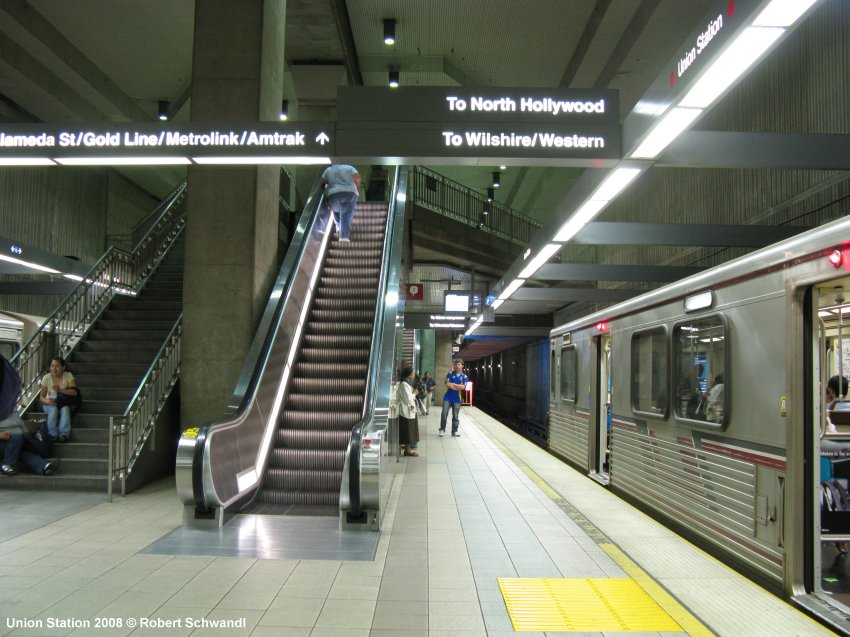
I remember the exact moment I started doing this myself. I was in a subway station in LA. Other than the years I spent there, I've never lived anywhere with a subway system. I had been on the NY subway when I was younger, but my senses weren't as keen then. This particular day in LA, I happened to notice the rush of air that proceeds the arrival of a train. You can feel it even before you hear the squeal of the train's brakes. This detail isn't particularly life-changing, but it gave me pause. It makes perfect sense why it happens; the air is being displaced by the train just as water is displaced when you slip into the bathtub. But I had never heard anyone mention it before. And its exactly those kind of details that make a setting real.

Details like that exist for all the five senses, and they cover the entire spectrum of human interaction. If you tune in to them, they will begin to populate your writing even without deliberate effort. The mere act of observing them plants them in your subconscious, and they begin to naturally emerge in your work.

Being open to the world around you is one of the most important habits a writer can develop. If we're to write what we know without writing exclusively about ourselves, we'd better know everything we can. (Like this quote? Click here to tweet it!)

3/14/2016

The Ten Commandments of Fiction Writing, Part Seven


As a student of the art of fiction, there are several axioms and pieces of advice that I come across again and again; "show, don't tell", "write what you know", "don't trick the reader", etc. These aren't items from a single book, they're everywhere. Some of them surely originate with specific authors, but as ideas they've taken on a life of their own, becoming more than something one person said.

In this series, I will try to gather all those admonitions, encouragements, and adages into a single, definitive list; the Ten Commandments of Fiction Writing. Hopefully this will be as fun and educational for you as it is for me.

-----

Commandment Seven: Thou shalt know thy characters and settings as thyself


We've all been told to write what we know (and if you keep reading this series, you'll be told again), but that axiom works in reverse too: know what you write.

Part of my problem with pantsing is that when you begin with a blank page, you begin with flat, undeveloped characters (Like this quote? Click here to tweet it!). You might put them into a dramatic situation, but you don't really know how they'll act, and without some kind of plan for character development, you're bound to miss a few opportunities. They might surprise you, which is good, but chances are they won't start surprising you right off the bat.

Characters are the core of your story, and they are the part that readers are most likely to remember. When I read Foxfire as a lonely teenage boy, I fell in love with Maddy and Legs. I missed them when the book ended. I missed them so badly that I actually wasted the time to see the god-awful 1996 adaptation. I don't know if Joyce Carol Oates is a plotter or a pantser, but she damn sure spent some time on the characters in Foxfire. They felt more alive and real than a lot of actual people I've met.

The issue is the same for settings. If you create a setting on the fly, chances are it's going to be pretty drab on the first pass. If you describe anything, it'll probably be the most obvious stuff, and that isn't what brings settings to life. Readers are savvy enough to fill in the obvious details on their own. The key is to provide the details that aren't obvious, and just enough of them to get the reader's imagination going. To do that, you have to get your imagination going.

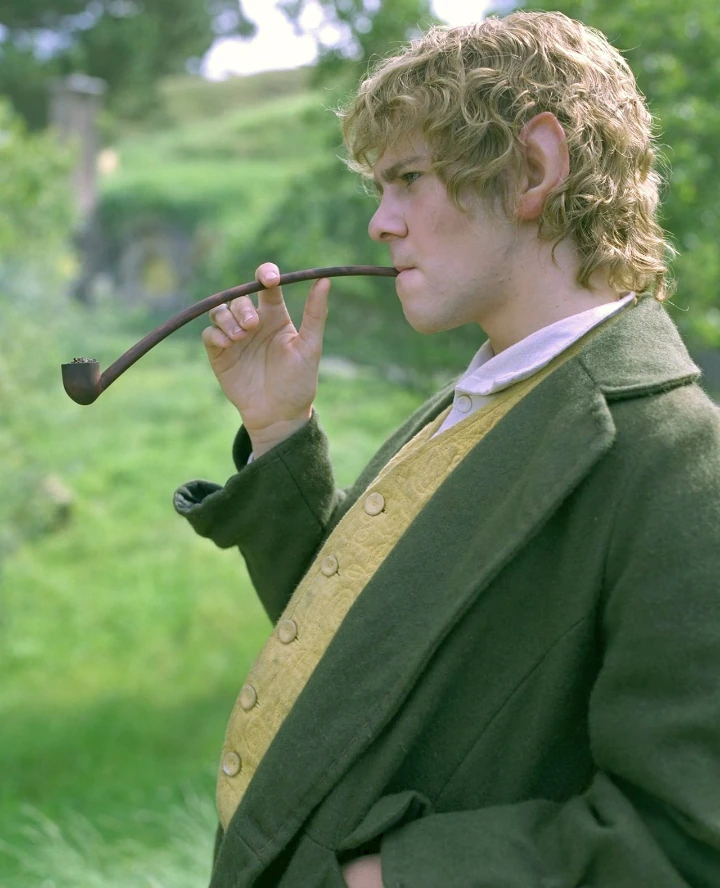
Settings aren't always the most important element of a story, but they can be powerful if you develop them well. Anyone who's read Lord of the Rings probably wanted to live in Middle Earth, orcs and all. I remember reading those books and vividly imagining all the food, drink, and pipe-weed the characters consumed--heck, I'd be lying if I said it wasn't part of the reason I'm a pipe smoker to this day. Little details like that made the world so real that a part of me never left. Tolkien definitely overdid it when it came to exposition, there's no question, but his setting became part of his reader's lives forever.

While I strongly advise restraint when it comes to including details about characters and settings, it never hurts to generate those details. The only way you can know too much about your characters and setting is if taking notes becomes an addiction, and keeps you from actually writing. And as a borderline OCD case, I can see where that would happen. But when you're plotting, it's worthwhile to research or create as much detail as you can. You never know when you'll see an opportunity for intrigue. It's the Pantry Method again; gather all the information you can, and only show readers the really interesting bits. The rest will be there if you need it, and if you don't so what?

For me, a well-defined task is essential. That's why I took the time to build templates to help me in this process. I've tried to ask myself every possible question, and when I'm plotting a story, I answer as many as I can. If that sounds helpful to you, Check out my Plotting Resources page, where you can download all of my plotting templates.

Even if you're not a plotter, you need to find a way to get into your characters and explore your settings. Without them, your book is a synopsis at best.